Tour AND Travel
A Unique Guide to Exploring America
Discover vibrant cities, scenic road trips, national parks, historic destinations, cultural experiences, and practical travel ideas for an unforgettable journey across the USA.
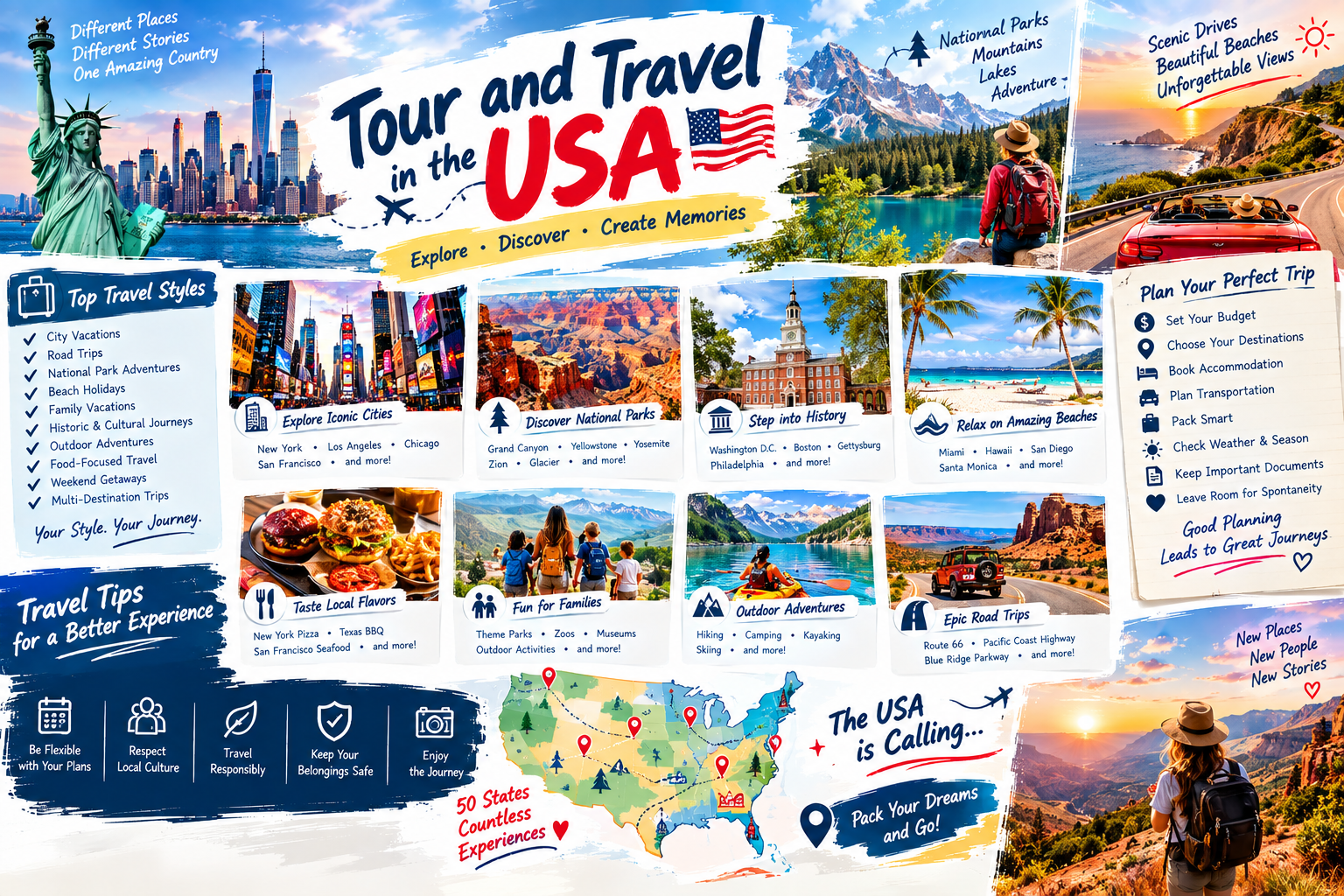
Tour and travel in the USA can mean something different to every traveler.
One person may dream of exploring famous city streets, while another may prefer a peaceful national park, a coastal drive, a historic town, or a long road trip through changing landscapes.
The country's geographic and cultural diversity makes it possible to create many different types of vacations. A successful trip, however, is not only about choosing destinations. Good planning can help travelers manage time, transportation, accommodation, activities, and expenses while leaving enough room for discovery.
1. Choose a Travel Style That Fits You
Before building an itinerary, think about what kind of experience you want.
Popular travel styles include:
City vacations
Road trips
National park adventures
Beach holidays
Family vacations
Historic and cultural journeys
Outdoor adventures
Food-focused travel
Relaxing weekend getaways
Multi-destination trips
Knowing your travel style makes it easier to select destinations and avoid creating an itinerary that feels rushed or exhausting.
2. Explore America's Major Cities
The USA is home to cities with very different personalities.
Travelers can experience architecture, museums, restaurants, entertainment, shopping, sports, neighborhoods, waterfronts, and cultural attractions in urban destinations.
A city-focused trip can be especially useful for travelers who prefer to explore without driving long distances every day.
When planning a city visit, consider:
Neighborhoods you want to explore
Major attractions
Public transportation options
Walking distances
Dining opportunities
Local events
Travel time between attractions
Instead of trying to see everything, choose a manageable group of experiences that genuinely interest you.
3. Experience Scenic Road Trips
Road trips are one of the most flexible ways to experience the USA.
A long drive can connect cities, small communities, natural landscapes, historic locations, and unexpected stops along the way.
A good road-trip plan should include:
A realistic daily driving distance
Planned rest stops
Accommodation options
Fuel considerations
Vehicle preparation
Weather awareness
Alternative routes
Time for unexpected discoveries
The journey itself can become one of the most memorable parts of the vacation.
4. Discover America's National Parks
National parks offer opportunities to experience mountains, forests, deserts, coastlines, rivers, wildlife, and other natural environments.
For travelers interested in outdoor experiences, a national park trip can include:
Hiking
Scenic drives
Photography
Wildlife observation
Camping
Stargazing
Educational programs
Nature walks
Before visiting a specific park, travelers should check current official information for operating conditions, reservations, permits, fees, weather, road conditions, and possible alerts.
5. Explore American History
Traveling through the USA can also become a journey through American history.
Historic destinations can introduce travelers to colonial communities, Revolutionary-era locations, historic homes, battlefields, Indigenous heritage, transportation history, and preserved architecture.
History-focused travel becomes more meaningful when visitors take time to understand the people, communities, events, and perspectives connected to each place.
6. Experience Different Landscapes
One of the great advantages of traveling across the USA is the variety of landscapes.
Depending on the destination, travelers can experience:
Mountain ranges
Desert scenery
Forests
Beaches
Lakes
Open plains
Coastal highways
Urban skylines
Rural communities
This diversity makes the country particularly suitable for travelers who want several different experiences during one larger trip.
7. Plan Around the Season
The ideal travel period depends heavily on the destination and activities.
Summer can be popular for outdoor trips and family vacations, while other seasons may offer different scenery, temperatures, or travel experiences.
Before choosing dates, consider:
Typical weather
Crowds
Road conditions
Seasonal attractions
Accommodation demand
Local events
Outdoor activity conditions
Always verify current destination-specific information before departure.
8. Create a Realistic Travel Budget
A travel budget should include more than transportation and hotel costs.
Consider expenses such as:
Transportation
Accommodation
Food
Entrance fees
Tours and activities
Parking
Fuel
Travel insurance where appropriate
Shopping
Emergency expenses
A useful strategy is to separate essential expenses from optional activities.
This allows you to enjoy special experiences without losing control of the overall budget.
9. Choose Accommodation Carefully
Accommodation can influence the entire travel experience.
Depending on the trip, options may include hotels, resorts, vacation rentals, campgrounds, lodges, and other lodging arrangements.
Consider:
Location
Price
Transportation access
Amenities
Cancellation conditions
Parking
Distance from major attractions
Suitability for your group
A slightly more convenient location can sometimes save significant travel time during a busy city trip.
10. Make Packing Practical
Packing should match your destination and activities.
A practical travel bag may include:
Comfortable clothing
Appropriate footwear
Weather protection
Personal essentials
Chargers and travel electronics
Reusable water equipment
Basic first-aid supplies
Necessary travel documents
For outdoor adventures, packing requirements may be very different from those for a city vacation.
The goal is to bring what you need without carrying unnecessary items.
11. Make Family Travel Easier
Family travel requires a different approach to planning.
Children may need more breaks, flexible schedules, suitable meals, and activities that match their interests.
Helpful strategies include:
Avoiding overly packed itineraries
Scheduling rest periods
Choosing family-friendly accommodation
Preparing snacks and water
Including interactive activities
Allowing children to participate in destination choices
A flexible itinerary can make family vacations more enjoyable for everyone.
12. Use Technology as a Travel Assistant
Modern technology can make travel easier when used thoughtfully.
Travelers can use digital tools for:
Navigation
Reservations
Weather updates
Maps
Travel documents
Communication
Photography
Itinerary organization
However, it is wise to keep important information available offline when possible and maintain access to essential documents independently of a single device.
13. Travel Responsibly
Responsible tourism helps protect the destinations that travelers enjoy.
Simple practices include:
Respecting local communities
Following park regulations
Staying on designated trails
Avoiding damage to natural or historic sites
Disposing of waste properly
Respecting wildlife
Supporting local businesses
Following local rules
Responsible travel helps preserve destinations for future visitors.
14. Don't Try to See Everything
One of the most common travel-planning mistakes is creating an itinerary that is too ambitious.
Trying to visit too many cities or attractions can turn a vacation into a race against the clock.
Instead, choose fewer destinations and give yourself enough time to actually experience them.
A relaxed afternoon exploring a neighborhood can sometimes become more memorable than checking another attraction off a list.
15. Travel Ideas for Different Travelers
For Families
Choose destinations with varied activities, comfortable accommodation, and manageable travel distances.
For Couples
Consider scenic destinations, cultural experiences, food-focused trips, relaxing resorts, or memorable road journeys.
For Solo Travelers
Prioritize practical transportation, comfortable accommodation, clear navigation, and flexible itineraries.
For Outdoor Enthusiasts
Look for destinations offering hiking, camping, scenic drives, water activities, or other nature-based experiences.
For History Lovers
Build trips around historic communities, museums, landmarks, preserved buildings, and important cultural locations.
For Budget Travelers
Compare transportation and accommodation options, prioritize experiences that matter most, and leave room for unexpected costs.
16. Common Travel Mistakes to Avoid
Travelers can improve their experiences by avoiding a few common problems:
Planning too many destinations
Underestimating travel time
Ignoring seasonal conditions
Forgetting reservation requirements
Creating an unrealistic budget
Packing unnecessarily
Not checking cancellation policies
Relying entirely on mobile connectivity
Ignoring local rules
Leaving no flexibility in the itinerary
Good preparation reduces stress while still allowing room for spontaneity.
17. A Simple USA Travel Checklist
Before leaving, review:
Destination and route
Transportation arrangements
Accommodation
Important reservations
Travel budget
Weather information
Required documents
Clothing and footwear
Electronics and chargers
Navigation options
Emergency contacts
Destination-specific alerts and rules
Final Thoughts
Tour and travel in the USA is about more than visiting famous places. It is an opportunity to experience different landscapes, communities, cultures, histories, cuisines, outdoor environments, and ways of life.
Whether you prefer a major city, a scenic highway, a national park, a historic destination, or a quiet weekend escape, thoughtful planning can help you make the most of your journey.
Travel slowly enough to notice the details, plan wisely enough to avoid unnecessary stress, and leave enough room for the unexpected moments that often become the best memories.
🛒 View Product Details: Rodent Repellent Pouches
🛒 View Product Details: wireless hdmi display adapter
As an Amazon Associate we earn from qualifying purchases made through these links, at no extra cost to you.
Advertisement
No comments yet. Be the first to share your thoughts!